
Rise Institute

blog

machine learning algorithms

Myths of Machine Learning Algorithms in Python

Introduction to Machine Learning Algorithms in Python Machine learning algorithms are a hot topic right now. Do they really work? Can they be used to solve any problem? Are they really that different from traditional programming techniques? In this article, we will unravel the myths of machine learning algorithms in Python. We will see how they work and how they can be used to solve real-world problems. We will also see how they differ from traditional programming techniques, and why they are such an important tool for data science. What Are Machine Learning Algorithms? Machine learning algorithms are programs that can learn from data. They are used to make predictions or decisions, based on patterns in the data. Machine learning algorithms can be applied to a variety of tasks, such as image recognition, text analysis, and predictive modeling. There are many different types of machine learning algorithms, each with its own strengths and weaknesses. Some of the most popular algorithms are linear regression, logistic regression, gradient descent, and support vector machines. Types of Machine Learning Algorithms There are three main types of machine learning algorithms: supervised learning, unsupervised learning, and reinforcement learning. Supervised learning algorithms are trained using a set of data that has been labeled with the correct answers. For example, if you wanted to teach a machine to distinguish between cats and dogs, you would first show it a lot of images of cats and dogs, and then label each one as cat or dog. The machine would learn by comparing the labeled images with the unlabeled images, and gradually develop the ability to distinguish between the two. Unsupervised learning algorithms are not trained using any labeled data. They learn by analyzing the data itself and trying to find patterns. For example, you could use an unsupervised learning algorithm to learn how to group different items together based on their similarities. Reinforcement learning algorithms are trained using feedback from an environment. For example, you could use a reinforcement learning algorithm to teach a machine how to play a game by providing it with feedback on its performance. When to Use Python for Machine Learning Python is a versatile language that can be used for a variety of purposes, including machine learning. Python is a high-level language that is easy to learn and use. It has a wide variety of libraries and tools that make it well-suited for machine learning. However, Python is not the only language that can be used for machine learning. There are a number of other languages that are also suitable for this purpose. When choosing a language for machine learning, it is important to consider the specific needs of the project. Python is a good choice for many projects, but it is not the only option available. Popular Python Libraries for Machine Learning If you are looking to become a machine learning expert in Python, then you will need to familiarize yourself with a few popular Python libraries. Some of the most popular libraries that you can use to design algorithms and functions include Scikit-learn, TensorFlow, PyTorch, and NumPy. Scikit-learn is a great tool for building machine learning models without any expertise in programming. Similarly, TensorFlow is an open-source library for creating neural networks and machine learning models, while PyTorch is a library for deep learning and AI applications. Finally, NumPy is a library for scientific computing with arrays and matrices which has much to do with machine learning algorithms in Python. These tools are all essential for developing your machine learning skills in Python. Steps to Building Machine Learning Algorithms in Python You can go through the process of building machine learning algorithms in Python in a few simple steps. First, you need to choose a dataset. This should be a large dataset that contains plenty of examples so the algorithm can accurately predict results. Once you have your dataset, you need to clean it up, and then create an algorithm that can accurately process the data. Once you have your algorithm ready, it’s time to test it and tweak it until it works properly. Finally, you can deploy the machine learning algorithm and use it to solve real-world problems. Common Challenges With Implementing ML Algorithms in Python You may come across some common challenges when implementing ML algorithms in Python. First, you will have to decide which model would suit your data best and there is no one-size-fits-all solution. You’ll also have to make sure that your data is organized as necessary before you begin coding. Furthermore, you will also need to be aware of the various libraries available and how they interact with each other. Finally, you will have to adjust the parameters of your model to get the best results. Conclusion You should now have a good understanding of some of the most popular machine learning algorithms, their strengths, and weaknesses. You should also be familiar with the basic concepts of how they work. If you’re just getting started with machine learning, I recommend following a machine learning tutorial to get a better understanding of the basics. After that, you can start experimenting with different algorithms on your own datasets. Don’t be afraid to try different things and experiment. You’ll never know what works best until you try it yourself.

Myths of Machine Learning Algorithms in Python Read More »

business intelligence

What is Business Intelligence? All You Need to Know

Introduction of Business Intelligence Business intelligence (BI) is a term that is used a lot in the business world, but what does it actually mean? BI is a process that helps businesses make better decisions by understanding and analyzing their data. It can be used in a number of ways, such as improving customer service, increasing sales, and reducing costs. BI can also help businesses to understand their customers better, so that they can create products and services that appeal to them. If you are thinking of implementing BI in your business, or you are just starting out and want to learn more, then this is the guide for you. We will explain what BI is, how it works, and the benefits that it can bring to your business. Overview of Business Intelligence Business intelligence (BI) is a process of gathering, analyzing, and reporting on data to help businesses make better decisions. It can be used to track performance, identify trends, and make predictions about the future. BI tools can be used to track everything from customer behavior to financial data. They can also be used to create reports and dashboards that can be shared with employees across the organization. BI is an important tool for businesses of all sizes and can help them make more informed decisions about their operations. Components of Business Intelligence Business Intelligence has three main components: data, analytics, and reporting.Data is the raw material that is used in business intelligence. It can come from a variety of sources, including surveys, customer data, financial data, and social media. Analytics is the process of transforming data into information. This can be done by using data mining techniques, text analytics, and predictive modeling. Reporting is the process of visualizing information so that it can be easily understood. Reports can be in the form of graphs, charts, and tables. Benefits of Business Intelligence Business intelligence offers a range of benefits to businesses.Some of the key benefits of business intelligence include: Improved decision-making: Business intelligence provides businesses with access to timely, accurate, and relevant data. This allows businesses to make better decisions based on solid evidence. Increased efficiency: Business intelligence enables businesses to track performance and identify areas where improvements can be made. This helps businesses to operate more efficiently and achieve better results. Maximized profits: Business intelligence allows businesses to analyze data to identify opportunities and trends. This helps businesses to make more informed decisions about pricing, products, and marketing strategies, which leads to increased profits. Challenges Faced in Business Intelligence When utilizing business intelligence, you may experience some challenges. It is time-consuming to collect and organize data, especially when it comes from multiple sources. Plus, you must ensure that the data is accurate and valid, which can be a difficult task. Additionally, making sense of the data can be challenging since it involves complex analysis and visualization processes. Lastly, updating the system regularly to reflect changing trends is important but requires added resources. Strategies for Implementing Business Intelligence As a business intelligence (BI) user, you have many strategies to consider when it comes time to implement BI. It is important to decide what systems and applications will work best for you and your organization. You must also be sure to invest the right amount of time and resources into designing and customizing a solution. When done successfully, the outcomes of investing in an effective BI system can be substantial. Getting started requires that you identify the goals of your project, understand the data that needs to be collected and analyzed, and then evaluate available software options to find the one that best fits your needs. Once this has been established, you should create a comprehensive plan for implementation and address issues such as security concerns, cost considerations, and training requirements. Finally, it is important to track results in order to determine how successful your BI strategy was at achieving its goals. Common Metrics Used by Business Intelligence There are several common metrics that Business Intelligence frequently uses. These include metrics such as customer satisfaction and loyalty, sales and revenue, market share and penetration, customer acquisition costs, customer lifetime value, operating expenses to revenue ratios, inventory levels, production rates and turnaround times. You can also measure employee performance, staff efficiency, quality control processes and compliance with industry regulations. All of these metrics help to give an accurate picture of your business’s performance and can be used to inform decisions on how to improve operations. Conclusion All in all, business intelligence is a process that helps businesses make better decisions by collecting and analyzing data. By using business intelligence, businesses can save time and money, and make more informed decisions about their products, services, and customers. Business intelligence is not a one-time event, but a continuous process that should be revisited on a regular basis.

What is Business Intelligence? All You Need to Know Read More »

image used in blog of rise institute

A Comprehensive List of SQL Interview Questions

Introduction SQL is a powerful query language that is used to manipulate and query data in relational databases. It is one of the most popular database languages in use today, and it is essential for anyone who wants to work in the field of data analytics or database administration.If you are looking for a job in the field of data analytics or database administration, then you will likely need to pass an SQL interview. The questions can be difficult, and it is important to be prepared. In this article, we will provide a comprehensive list of SQL interview questions and answers. We will also provide tips for how to best answer these questions. What Is SQL and How Does It Work? SQL is a database query language.It allows you to easily manipulate and query data from a database. SQL works by reading a database schema and creating a query plan, which is then executed to return the desired results.SQL is used in a wide range of applications, from small websites to large corporate databases. It is a very versatile tool and is essential for any database administrator or developer. What Is the Purpose of Using DDL and DML Commands in SQL? The two main types of SQL commands are DDL and DML.DDL, or Data Definition Language, is used to define the structure of a database. This includes the creation of tables, columns, and constraints.DML, or Data Manipulation Language, is used to insert, update, and delete data from a database. How Do You Find Duplicate Records in a Table? You can find duplicate records in a table by using the following SQL statement:SELECT * FROM table_name WHERE column_1 = column_2; What Are the Different Types of Joins in SQL? Knowing the different types of Joins in SQL is essential for any SQL interview. There are four main types of Joins: inner, left, right, and full outer join. An inner join is used to match rows from two tables that have the same value in a given column. A left join will include all records from the left table but only matching records from the right table and vice versa for a right join. Lastly, a full outer join will include all records from both tables. Knowing these different types of Joins will prove your knowledge of SQL and put you ahead of other candidates. What Is an Index and Why Should You Use Them? When you are asked about indexes in an interview, it is important to remember that an index is a data structure used to improve the speed of data retrieval operations on a database table by reducing the number of disk accesses required when a query is processed. You should use indexes whenever possible, because they can significantly speed up search, join, and order by operations. Furthermore, it is much faster to scan the index rather than scanning through all of the records in the table. Indexes also help with query optimization since they help reduce the cost of executing queries. What Are the Most Common SQL Performance Optimization Techniques? When it comes to performance optimization, there are several techniques that you should be aware of. Indexing is one of the most common SQL optimization techniques. Indexing allows you to quickly search for records that match a given criteria, which can lead to faster query processing. Another popular technique is normalization, which helps with data maintenance by breaking down larger data sets into smaller, logical pieces.  Lastly, stored procedures can also be used to increase performance as they allow you to store logic in the database instead of in application code. Being able to answer questions like these will give you a leg up in the interview and show that you understand the concepts and techniques behind SQL performance optimization. Conclusion But don’t just stop at practicing your answers to these questions. In addition to thoroughly understanding the concepts behind the questions, you should also be able to speak to your experience with SQL in a way that is clear, concise, and convincing. And, of course, don’t forget the basics like making sure you arrive on time, dress the part, and exude confidence. With a little preparation, you’ll be nailing SQL interviews in no time.

A Comprehensive List of SQL Interview Questions Read More »

Data Science Interview Questions: Pro Tips & Tricks

Data Science Interview Questions: Pro Tips & Tricks

data science interview questions Introduction So, you’ve landed an interview for a coveted data science role congratulations! One of the hiring managers has already mentioned that they’ll be asking questions related to data mining, machine learning, and predictive modeling.Don’t worry, you can ace this interview! We’ve compiled a few tips and tricks to help you out. Below are some of the most common questions asked in data science interviews, as well as some advice on how to answer them? Good luck! What to Expect in a Data Science Interview So you’ve landed an interview for a data science position congratulations! Now comes the hard part: preparing for it.In order to ace the interview, you’ll need to be well-versed in the basics of data science, as well as in the specific terminology used by your interviewer. You’ll also need to be able to explain your experience and skills in a clear and concise way.But most importantly, you’ll need to be prepared to answer tough questions. Interviewers will often throw curveballs at candidates in an attempt to gage their problem-solving skills and level of expertise.Don’t worry, though. With a little preparation, you can master the art of answering data science interview questions. In this article, we’ll give you some tips and tricks that will help you stand out from the competition. General Data Science Questions and How to Answer Them So you want to be a data scientist? Great! But first, you need to be ready to answer some tough questions.In any data science interview, you can expect to be asked a range of questions about your experience, skills, and knowledge. But while you can’t predict every question that will come your way, there are some general questions that are commonly asked in interviews.How do you go about answering these questions? Well, the key is to be prepared and to stay calm. Here are a few tips and tricks for tackling data science interview questions head-on: Do your research.  Before going into an interview, make sure you know as much as possible about the company and the role you are interviewing for. This will help you better understand the questions being asked and give you some great talking points. Stay calm and collected.  The best way to answer tough questions is to stay calm and collected. Take a deep breath, relax, and think about how you would best answer the question. Be specific.  When answering any question, be specific and provide examples whenever possible. This will help illustrate your point and show that you have the experience and skills required for the role. Questions Related to Programming Languages Used in Data Science As a data scientist, you will be expected to know how to use a variety of programming languages. So when answering interview questions related to programming languages, it’s important to be prepared.Your interviewer will likely ask about your experience with different languages, as well as your thoughts on the best language for data science. Be sure to highlight your ability to learn new programming languages quickly, and your preference for languages that are easy to read and write.You should also be prepared to answer questions about your experience with popular data science libraries and frameworks. Showcase your expertise in languages like R and Python, and be prepared to talk about any projects you’ve completed using these tools. Analyzing Data via Machine Learning, Statistics, and Analytics You may be asked questions related to analyzing data via machine learning, statistics, and analytics. It is important to know the fundamentals of these topics and how to apply them in a data science context. For example, you should be able to answer questions related to understanding the different types of machine learning algorithms, such as decision trees and neural networks, and how they can be used to solve different problems. Additionally, you should be familiar with basics statistical techniques such as hypothesis testing and regression analysis.You should also be able to explain the process of data analysis, including how raw data is collected and stored in a database, how it’s cleaned up for analysis, and what techniques you used for analyzing the data. Finally, have an understanding of the various types of analytics tools available and know which one is best suited for solving a given problem. As a data scientist, it’s essential that you understand these topics inside out! The Importance of Communication and Storytelling Remember, communication and storytelling are key to answering data science interview questions. Employers want to see that you have an understanding of the problem, and that you can explain it in an easy-to-understand way. Be sure to adequately explain your thought process! Don’t just talk about the technical side of things; use examples and stories to illustrate your points. To do this, use vocabulary you know the interviewer will understand. Even if they’re not in the field, they should still be able to grasp what you’re talking about if it’s conveyed in a simple manner. And finally, don not forget to practice active listening! Listen for cues from the interviewer about what information or type of story is important for them to hear. Doing this will show them how well you can actually understand their needs and develop a strategy that meets them best. Tips and Tricks for Mastering the Art of the Data Science Interview You are ready to take on the data science interview and become a master at it. Here are some tips and tricks to remember while you are taking part in the interview. First, make sure that you are prepared. Research the company and its industry beforehand so that you can provide well-informed answers. Additionally, practice your answers with a friend or mentor before the interview. Secondly, be confident but not cocky. You have unique skills and experiences that will help you stand out from other candidates showcase that without coming across as overly arrogant. Aim to have a casual conversation during the interview, as this will make you seem more relaxed and easy-going during the process.Finally, don not forget

Data Science Interview Questions: Pro Tips & Tricks Read More »

How to become a etl developer

How To Become A ETL Developer

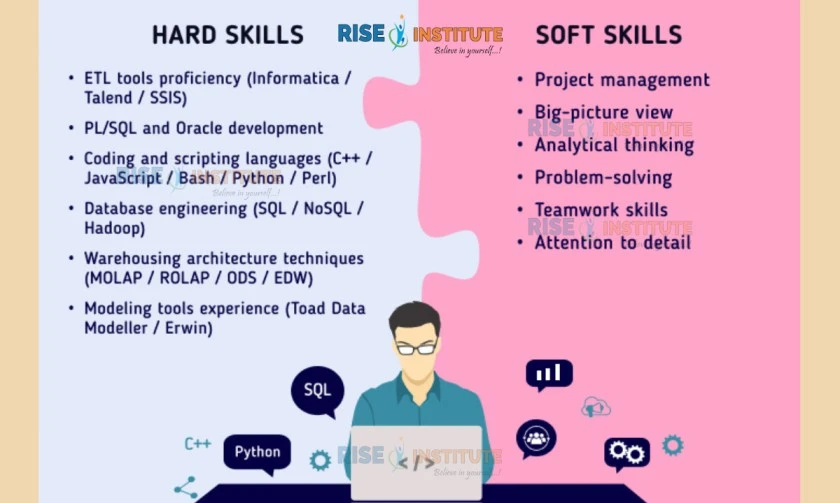
How to become a ETL developer? While the job market is growing rapidly, it’s not as easy as just sending in your resume. In order to become an ETL developer, you need to have the right skills.But don’t worry, we’re here to help. In this post, we’ll outline the skills that you need to become and ETL developer and what you can do to acquire them. We’ll also include a few resources to help get you started. What Is an ETL Developer? An ETL developer is responsible for the Extract, Transform, and Load (ETL) process. This process is used to collect data from various sources, clean and normalize it, and then load it into a target database.In order to be an successful ETL developer, you need to have a strong understanding of data warehousing concepts, as well as experience with a variety of ETL tools. You also need to be able to write SQL queries, as this is often used in the ETL process. If you’re interested in becoming an  developer, I suggest taking some courses on data warehousing and ETL tools. You can also find some helpful resources online. And of course, practice makes perfect, so be sure to get some hands-on experience with ETL before you apply for jobs. What Skills Does an ETL Developer Need? You’ll need a few specific skills to become an good ETL dev. First, you’ll need to know how to extract data from various data sources. This might include databases, text files, and web services.Next, you’ll need to know how to transform this data. This includes cleansing the data, normalizing it, and converting it into a format that can be used by the target system. Finally, you’ll need to know how to load the transformed data into the target system. This might be a relational database, a data warehouse, or another type of system. In addition to these technical skills, you’ll also need strong communication and problem-solving skills. ETL developers need to be able to work with business users to understand their needs and then translate those needs into technical requirements. They also need to be able to troubleshoot issues that arise during the ETL process. How to Become an ETL Developer In order to become an good ETL developer, you will need a few key skills. First and foremost, you should have a strong background in Structured Query Language (SQL). SQL is a programming language used for managing data in databases. In order to be successful in this role, you should be able to write SQL queries to extract data from databases, as well as load data into databases. In addition to having a strong SQL background, it is also important to have experience with ETL tools such as Informatica PowerCenter, Oracle Data Integrator (ODI), or Talend. These tools are used to automate the process of extracting, transforming, and loading data. Familiarity with these tools will be essential in this role. Finally, it is also important to have strong problem-solving skills. As an developer, you will be responsible for troubleshooting issues that arise during the ETL process. Being able to identify and solve problems quickly and efficiently is a key skill in this role. The Role of an ETL Developer in a Company In a nutshell, an ETL developer is responsible for extracting data from various sources, transforming it into a format that can be used by the company, and then loading it into the system. However, that’s just the basics. An developer also needs to be able to understand the company’s data needs and design ETL processes that meet those needs. They also need to be able to troubleshoot issues that arise during the ETL process and work with other team members to resolve those issues. And finally, an good ETL developer needs to have strong communication skills. They need to be able to communicate with team members from various departments in order to get a clear understanding of the company’s data needs. They also need to be able to communicate their designs and solutions clearly so that everyone is on the same page. The Different Types of Etl Tools Available When it comes to ETL tools, there are a few different types you can choose from. The most common ones are commercial tools, open-source tools, and custom-built tools. Commercial tools are the ones that you have to pay for. They’re usually pretty user-friendly and come with a lot of features and support. Open source tools are free to use, but they might not be as user-friendly and might not come with as much support. Custom-built tools are just that’s tools that are built specifically for your needs. So, which one should you choose? It really depends on your needs and what you’re looking for. If you need something that’s user-friendly and comes with a lot of features, then a commercial tool might be the way to go. If you’re on a budget or if you need something specific, then an open source or custom-built tool might be a better choice. How much money do They make? The average salary is $7,000-$15,000 per year. What kind of training or education is required? There is no one-size-fits-all answer when it comes to training or education, as it depends on the specific organization’s needs. However, some common requirements include a bachelor’s degree in computer science or a related field, as well as experience in database administration or programming. What are some common challenges faced by ETL developers? Some common challenges faced by developers include data quality issues, performance bottlenecks, and implementation difficulties. Conclusion If you have coding skills and an interest in business intelligence, a career as an ETL developer could be a great fit for you. There’s a lot to learn, but with the right skill set, you can become an expert in the field. The most important thing for an good developer is to have strong coding skills. If you’re not a coder, you’ll need to learn the basics before you

How To Become A ETL Developer Read More »

[contact-form-7 id="d95d443" title="Rise Contact Form"]